Complaint from November meeting prompted discussion on land use at Mission Santa Ines
For its regular meeting on Monday, Jan. 26, the Solvang City Council discussed land use at Mission Santa Ines, more specifically the 2024 zoning change made to give the mission more flexibility in use of its property.
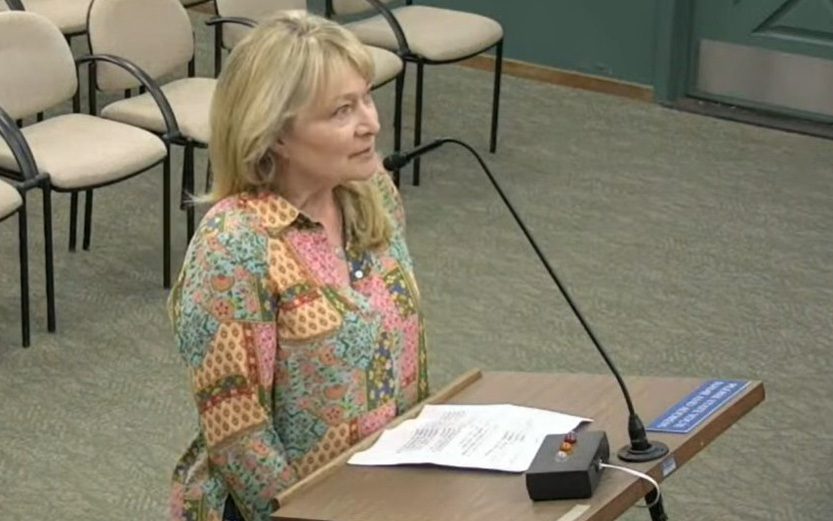
In the item, the first of five discussion items on the evening, was prompted by public comment during the Nov. 10, 2025, City Council meeting. During that session, Char Goetz, who owns the Flying Miz Daisy Vintage Market that periodically operates on the mission’s property and also serves on the city’s Design Review Committee, stated her objections to what she saw as overly restrictive oversight by the city’s Community Development Department while conducting her event. She requested that the zoning return to its designation before the 2024 change.
In the Jan. 26 meeting, Community Development Director Rafael Castillo reported that the current land use and zoning framework, adopted in July 2024, with and supported by the Archdiocese of Los Angeles, was intentionally crafted to convert the Mission from a non-conforming use to a conforming “quasi-public” facility while preserving parish activities, historic resources, and future flexibility. Staff also reviewed the Temporary Use Permit (TUP) process established under the 2024 Zoning Ordinance, which provides a streamlined and flexible mechanism for regulating temporary events on private property, and recommends no changes to the existing land use designations, zoning, or TUP regulations at this time.
The TUP allows for events such as the Vintage Market and the annual Fourth of July fireworks event to be held on mission grounds.
Castillo said prior to the adoption of the Land Use Map and General Plan, Mission Santa Ines was designated “Agriculture (AG)/Institutional (I)” (Figure 1). The Mission’s ancillary offices, and residential uses were located in the Institutional zone, considered an “allowed use”, and the remainder of the Mission was in the Agriculture zone, which required a conditional use permit (CUP) for meeting facilities, and the remainder was considered existing, non-conforming uses.
Castillo pointed out that the complaint was made by someone who was not the property owner or a representative, and that the zoning changes were approved by City Council in 2024 and supported by the Archdiocese of Los Angeles, which has authority over the mission.
“So at this point, the city staff is recommending no change to any of the land uses that has been designated as part of the General Plan by the zoning ordinance,” Castillo said.
However, Councilmember Elizabeth Orona questioned whether the zoning was appropriate, suggesting that the mission receive its own zoning designation. “Something singular like with the Alisal Guest Ranch or the mobile home park,” she said.
City Manager Randy Murphy repeated that the current zoning is fine with the archdiocese, which then prompted Elizabeth Orona to ask if the local administration had been consulted on this. Murphy answered that the city just deals with the archdiocese in those matters.
“I have concerns that the mission administration haven’t been consulted,” Orona answered. “The church should have more jurisdiction than the city on what happens on their property.”
To that, Mayor Dave Brown, who said he is a parishioner at the mission, said the local administration approves of the current setup.
“I’ve talked to the priest,” Brown said. “We’re in agreement to keep it the same.”
Meanwhile, Goetz was present for the Jan. 26 meeting and spoke at public comment, agreeing with the notion that the local mission hierarchy should be consulted.
“I have a wonderful relationship with staff there,” Getz said. “While city staff collaborated with archdiocese, the mission staff themselves were not consulted. Talking to archdiocese is not adequate.”
Goetz also repeated her desire to revert to previous zoning designation.
Ultimately, council decided to table the discussion, and consult the local mission staff before bringing it back at a late date. No action was taken.
In other business, the council approved four first readings of regulations, all meant to “clean up” language and disrepancies in city ordinances. One was Ordinance No. 26-0388, Amending Certain Sections of Title 1 (Administration), Chapter 3 (General Penalties) and Title 4 (Business Regulations), Chapter 9 (Business Certificates) of the Solvang Municipal Code to strengthen enforcement tools.
City Attorney Chelsea O’Sullivan said the item is the city’s effort to increase enforcement tools, make them less of a “paper tiger.” Under the change, the default violation on a citation would be a misdemeanor instead of the lower standard of “infraction,” with O’Sullivan pointing out they can lower a charge to infraction when reviewing it. And while criminal citations are allowed in code enforcement, they aren’t issued as such unless in extreme cases.
Councilmember Claudia Orona asked about the possibility of bringing criminal charges for code violations and whether that was necessary. Murphy repeated the “paper tiger” term and said they were putting some teeth into it.
“How sharp are the teeth?” asked Claudia Orona. “Could I spend six months in jail for not taking out my A-frame out of public?”
O’Sullivan said that while the option of jail time is in the ordinance, she said there was no way a judge would issue that for a city code violation. The point of it, O’Sullivan said, is that it would require the violator to go to court to take care, adding some “gravitas,” to the citation and emphasizing the seriousness of it.
Ultimately, council voted 5-0 to pass the first reading.
The City Council will next meet on Monday, Feb. 9, at 6:30 p.m.