Buellton City Council approves new traffic impact guidelines
By Michael Chaldu · Fri Feb 20 2026
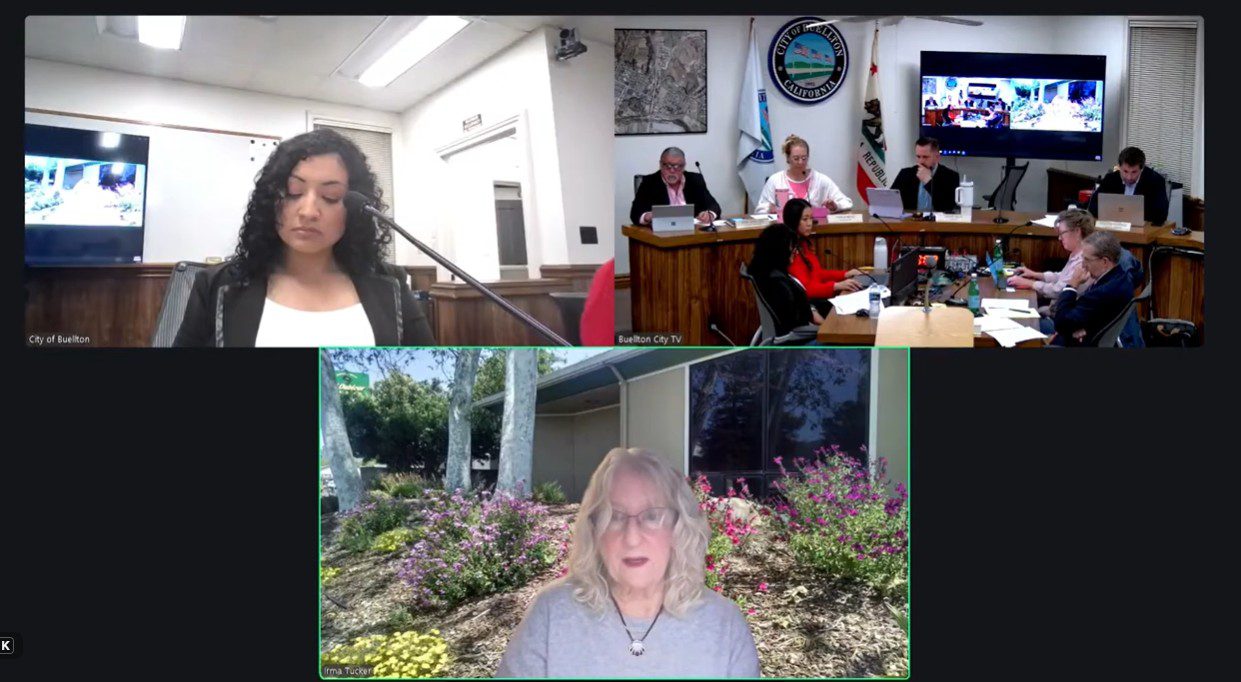
New standards praised by council, meant to help simplify development process
The Buellton City Council, in its Thursday, Feb. 12, meeting, heard and then ultimately approved new Traffic Impact Analysis (TIA) guidelines in an effort to improve communications to developers about what will be expected, and to claim more local input on developments on roads like Highway 246, the main drag of the city that's under Caltrans jurisdiction.
Councilmember Elysia Lewis and City Manager Scott Wolfe were absent from this meeting.
The Business Item 8 was the first of two on the agenda, and ultimately, the only one it took action on.
In introducing the item, Contract City Planner Irma Tucker said that city staff was instructed in May 2025 to work with traffic engineers to update the Interim Traffic Impact Analysis guidelines that were adopted in 2020-21. Buellton's Public Works and Planning Department staff worked with Associated Traffic Engineers (ATE), a Santa Barbara consulting firm, and the General Plan Update team.
Tucker said the new TIA guidelines "represent a more user-friendly and implementable tool for traffic impact evaluation, with standards that reflect traffic, circulation, and mobility issues specific to Buellton."
Among the key policy and operational issues are implementation into the city's General Plan update, addressing the needs of Buellton's small-town nature and location at the crossroads of two major highways, and identifying realistic assessment thresholds and standards in regards to major development projects planned along Highway 246.
Tucker identified two main aspects of the new guidelines are a Local Traffic Study (LTS), which would generally be required for all development projects in Buellton, and a Vehicle Miles Traveled (VMT) study, which may or may not be required and assesses how a new project could affect the distance a motorist may have to travel with the new development installed.
"The LTS is the most sensitive to local circumstances and consistency with city policy and gives the city the most local control with how traffic issues are mitigated," Tucker said.
During council questioning, Councilmember Hudson Hornick asked about certain exceptions made for the LTS requirement along Highway 246 intersections, including Highway 101, Avenue of Flags, and McMurray Road, among others. Tucker said they had a lower standard (LOS D) because they were the busiest intersections and there is limited ability to make required changes to reach the regular standard, and ability of approve development.
"Sounds like you're striking a balance between getting developments approved and the limitations on what developments can reasonably do; is that fair to say," Hudson said. Tucker replied that it was an accurate statement.
Tucker added that another aspect of the congestion is that traffic going slower across town can benefit businesses.
"Businesses can thrive on going slowly by and seeing your business, instead of just flying by," she said.
Mayor David Silva pointed out that the VMT, which he said was a greenhouse gas issue, could offset the declining effectiveness of the state CEQA requirements.
"At some point, CEQA was a really great tool to block development; over time state has weakened that," he said. "Now we have created objective standards for LTS; predictable, developers now know. As CEQA becomes less utilized, we’ve strengthening local ability to examine that in more efficient, objective standards."
However, Councilman John Sanchez interpreted that to mean the new guidelines could be used to stop development, as CEQA has had the repuation of doing.
But Silva answered back that, "As CEQA becomes less utilized, we’ve strengthening local ability to examine that in more efficient, objective standards."
City Attorney Greg Murphy then chimed in that the role of CEQA, and the LTS standards, is misconstrued.
"CEQA was used by people to stop development," he said. "CEQA not meant for that — it’s to study impact and mitigate them. CEQA is about studying impacts."
Vice Mayor Carla Mead has praise for the new standards before it went to vote.
"I feel this is being proactive," she said. "I asked what’s best way to get developers to Buellton, it is to get standardized policies that are clear, so builders know.
Having this proactive policy makes their job easier, that’s where developers want to be. It helps us greet people who want to invest in this city."
The council was scheduled to hear Business Item 9, adopting Resolution No. 26-02, which would raise the city's employee insurance contribution to $2,190 from the current $1,800. However, Sanchez recused himself due to having a finanical interest in the matter, leaving three councilmembers to hear the item.
Then, Hornick request to table the item because he wanted to ask questions about the topic to Wolfe, who was absent. Murphy then informed the council that unless the vote on the item was unanimous, it wouldn't be able to pass because two votes is less than the majority required to pass an item. With that, the council decided to table that item for a future meeting.
The next Buellton City Council meeting will be Thursday, Feb. 26, at 6 p.m.