Business owners speak out at Solvang City Council meeting against city fee for live music
By Michael Chaldu · Fri Feb 20 2026
Councilmembers also discuss mid-year budget adjustments, establishment of curb marking inventory
Live music and nighttime business suddenly emerged as a main topic at the Solvang City Council's Monday, Feb. 9, meeting — more specifically, how a recently installed $200 temporary use permit is affecting the city's nighttime businesses to provide that music.
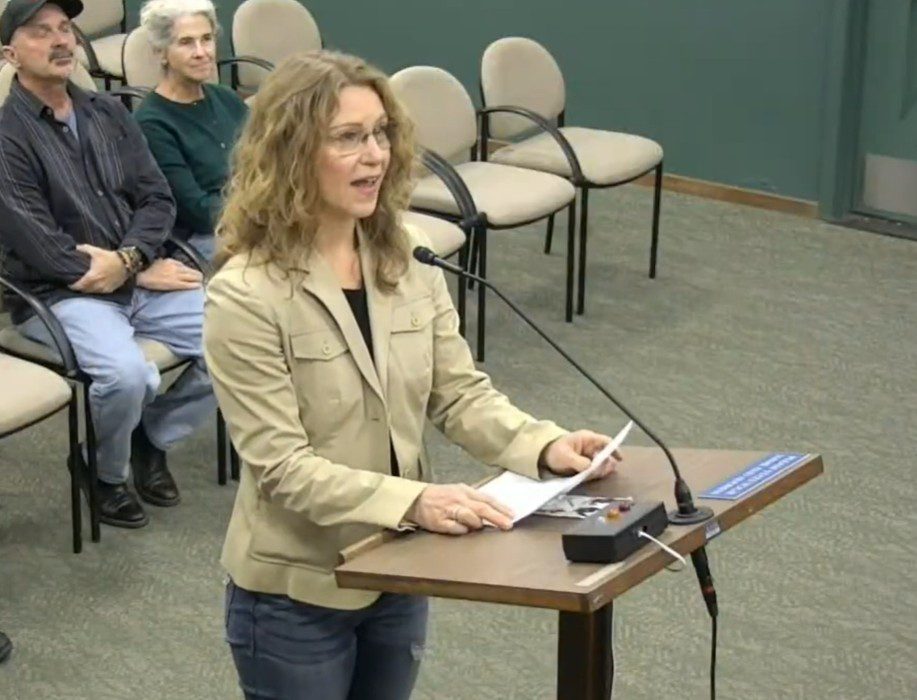
During Public Communications, Lisa Mesa, who along with her husband Alfred has owned and operated The Good Life craft beer and wine establishment, told the City Council the TUP was adding another difficult expense to her business, and others in town who like to provide people a place to go and listen to live music after 6 p.m.
"I'm hear to speak for the businesses that give this city a heartbeat after the sun goes down," Mesa said. "I ask the city reconsider the $200 temporary use fee requirement for businesses hosting live music. Adding a reoccurring financial hurdle is a step in the wrong direction for our local economy."
Mesa, whose business is located on Mission Drive in the middle of Solvang's tourist district, said the TUP fee is another tacked on to expenses that are already making it difficult for nighttime businesses to operate.
"The cost of doing business has reached a breaking point, and small businesses here have been squeezed from every side," Mesa continued. "We have increases in business license fees, rents continue to climb. This fee might seem nominal, but to us it's another death by 1,000 cuts."
Mesa pointed said her establishment has hosted live music "every Saturday night for 14 years" without any trouble.
"We have not had any noise complaints or visits from law enforcement or safety, and thousands of happy guest who stayed in Solvang and extra hour or two," she said. "I ask the council to remove the $200 fee on places that host live music. Let's not put a price tag on the vibrancy of our town."
Another local business owner, Peter Lancucki, who operates Final Girl Wines, also requested the fee be removed and pointed out the music at businesses like his and Mesa's are not very disruptive.
"The thing is, the events in the [Solvang] park have bands that are louder, although I really like those too," he said. "There's always people asking 'what is there to do after 6 in Solvang?' Well, we're providing that. The city is always spending money to bring people here, but you put barriers to have nightlife."
Also speaking was Keith Cox, a part-time musician from Santa Maria, who said the fee could bring an end to live music at local hangouts.
"The fee is punitive for businesses, who also have to pay BMI, and ASCAP licensing fees for cover bands," he said. "It's very expensive, and three out of five venues have stopped playing music."
Councilmembers could not formally discuss the matter at the meeting because it was not on the agenda; however, after Mayor Dave Brown and Councilmembers Claudia Orona and Elizabeth Orona expressed interest in revisiting the issue during Ex Parte Communications, it was announced that staff would work on getting an item on the agenda for a future meeting.
As for agenda items, the council heard a Mid-Year Budget review and budget adjustments from Administrative Services Director Wendy Berry. The budget has benefited from the Tourist Occupancy Tax (TOT) to the tune of $1.4 million so far in the fiscal year, which after expenses came to a change of $1.195 million for the current budget.
Elizabeth Orona asked about a line of $132,000 for addtional water pumping, which Berry said was due to the city having to pump more water with the lack of rain so far in the year. Claudia Orona later pointed out a discrepancy in the legal fees budget, which turned out to be a typo, with the actual figure being 411,000.
Ultimately, the council voted 5-0 to accept the budget adjustments with the corrected typo.
In the second, and final, discussion item, Public Works Director Bridget Paris introduced a budget adjustment to enable a citywide curb marking inventory project.
The Citywide Curb Marking Inventory Project is designed to create an inventory that will document, including through photographic evidence, existing curb conditions, such as curb color, restriction type, signage presence, and segment length. The resulting data will provide a reliable baseline for evaluating on-street parking capacity, curb utilization, and roadway marking needs.
The database and mapping will also support future development of a Curb and Street Marking Code, informed by California Vehicle Code requirements and best practices, to clarify installation criteria and enforcement standards. Findings will be used to analyze where curb markings may be installed, modified, removed, or maintained and to inform future temporary
and permanent parking strategies.
Councilmember Mark Infanti, who said he liked the project, moved to approved, with Claudia Orono seconding, and the item passed 5-0.
The City Council will meet next on Monday, Feb. 23, at 6:30 p.m.